
While AI brings significant advancements in tasks like image recognition and language understanding, it faces challenges with interpretability, data bias, computational requirements, lack of common sense reasoning, and ethical considerations. These issues impact its applicability in high-stakes domains such as healthcare and legal sectors, and require focus on diverse datasets, debiasing techniques, explainable AI (XAI), and responsible development to enhance accessibility and build human trust. Ethical guidelines are still evolving, emphasizing the need for fairness, transparency, and accountability in AI integration across daily life applications.
Neural networks, a cornerstone of artificial intelligence (AI), have revolutionized various fields due to their remarkable capabilities. However, despite their power, these models face significant limitations. From interpretability issues, where they’re often described as ‘black boxes’, to challenges with data bias and ethical concerns, this article explores critical constraints hindering neural network development. We delve into these aspects, highlighting the need for greater transparency and understanding in AI technologies.
- Limited Interpretability: Unraveling Black Box Models
- Data Bias and Representation Challenges
- Computational Complexity and Resource Demands
- Lack of Common Sense Reasoning
- Difficulty in Handling Ambiguity and Context
- Ethical Concerns and Privacy Risks
Limited Interpretability: Unraveling Black Box Models

One significant challenge with neural networks is their limited interpretability. Often referred to as “black box” models, these complex systems are capable of achieving remarkable results in various tasks, from image recognition to natural language understanding. However, their inner workings remain largely incomprehensible to human experts. This poses significant challenges, especially in high-stakes scenarios such as healthcare or legal domains where explainability is paramount. Understanding the reasoning behind a neural network’s decisions is crucial for building trust and ensuring ethical AI applications, like ai-enhanced virtual reality experiences.
This opacity is particularly problematic when it comes to debugging and improving these models. Unlike traditional software, where code can be easily inspected and modified, neural networks’ parameters and connections are not as transparent. This lack of interpretability hinders our ability to identify and rectify errors or biases that may have crept into the learning machine during training. Moreover, it complicates the process of incorporating domain knowledge, as experts cannot directly verify the relevance of learned features. While significant advancements in natural language understanding have been made possible through these models, giving us innovative ai applications in education, their inherent complexity reminds us to approach development with a keen awareness of these ethical considerations.
Data Bias and Representation Challenges

In the realm of artificial intelligence (ai), while neural networks have revolutionized various sectors, including ai in finance fraud detection and offering intriguing machine learning project ideas, they face significant challenges when it comes to data bias and representation. AI ethics considerations demand a careful examination of how these models learn from and reflect the data they’re trained on. If the training data is skewed or representative of societal biases, the neural network’s output will inherit these flaws, leading to inaccurate predictions and unfair outcomes, especially in critical areas like hiring processes or criminal justice.
To address these issues, researchers must ensure diverse and unbiased datasets are used to train models. Additionally, techniques for debiasing data and improving representation can help mitigate these challenges. Visiting us at deep learning algorithms comparison anytime can provide insights into the latest advancements and best practices in addressing these ai ethics considerations, ensuring that technology develops responsibly and equitably.
Computational Complexity and Resource Demands

Neural networks, while powerful, come with computational complexity and resource demands that can be significant. Training these models often requires vast amounts of data and computing power, making it a challenging task for smaller organizations or projects with limited resources. The AI ethics considerations surrounding this issue are crucial; ensuring accessibility and preventing further digital divides in areas like predictive analytics applications is essential.
As AI continues to evolve, its potential to revolutionize various fields such as healthcare—with natural language generation examples offering immense benefits—is undeniable. However, it’s important to balance the development of ai-driven personalized learning for special needs students with the practical realities of implementation. Visit us at [your healthcare AI platform] to explore these advancements and their implications in a responsible manner.
Lack of Common Sense Reasoning
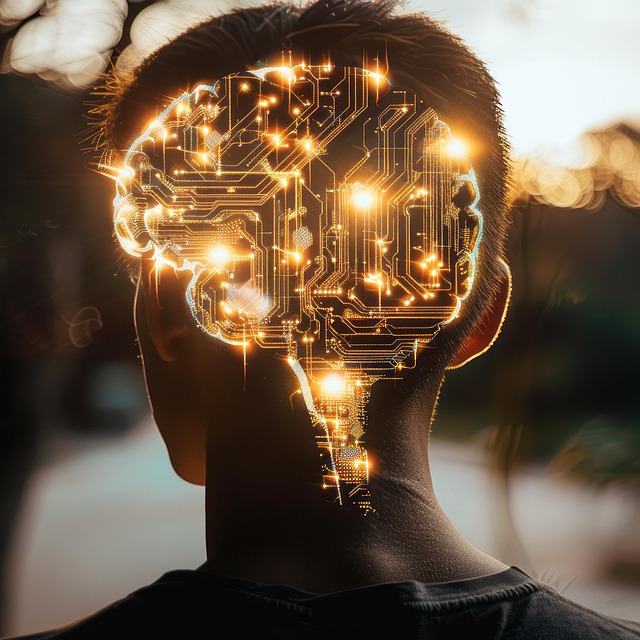
One significant limitation of neural networks is their lack of common sense reasoning abilities. AI models, despite their impressive performance in various tasks like image recognition and natural language processing power, often struggle with tasks that require understanding context or applying knowledge outside the scope of their training data. They cannot infer or generalize information based on real-world experiences, which limits their ability to solve novel problems. For instance, an AI might excel at identifying objects in images but may fail to recognize that a cat walking across a road is an emergency situation requiring human intervention.
This shortcoming is particularly evident in the realm of explainable AI transparency. As AI becomes more integrated into our lives, there’s a growing need for models that can provide clear explanations for their decisions. However, neural networks often operate as black boxes, making it difficult to understand why they made a particular choice. Future trends in artificial intelligence should focus on developing mechanisms that enhance explainability and foster human trust in AI systems, especially in critical applications like healthcare and autonomous vehicles. Visit us at natural language generation tools anytime for more insights into overcoming these challenges.
Difficulty in Handling Ambiguity and Context

Neural networks, while powerful, face significant challenges when confronted with ambiguous or context-dependent tasks. AI-powered translation services, for instance, often struggle with nuanced language, cultural references, and idiomatic expressions. The regulatory landscape for AI is still evolving, making it difficult for these systems to adapt to changing legal frameworks and ethical considerations.
This contextual limitation is also evident in AI-enhanced virtual reality learning scenarios. Machine learning from scratch can produce impressive results, but it relies heavily on the quality and diversity of training data. Give us a call at training data quality impact to discuss how we can help overcome these hurdles and improve the overall performance and reliability of neural networks.
Ethical Concerns and Privacy Risks

The rapid advancement of artificial intelligence (AI) brings both immense potential and significant challenges. One critical aspect that demands attention is the ethical implications and privacy risks associated with neural networks. As AI systems become more integrated into our daily lives, from data science and robotics to ai-driven medical diagnostics, ensuring fairness, transparency, and accountability becomes paramount.
Explaining AI decisions is a complex issue, especially as these algorithms learn and evolve based on vast datasets. Privacy concerns arise when personal data is used to train models, potentially leading to unintended consequences and the risk of sensitive information being exposed. The scope and limits of AI must be carefully considered, especially in areas like robotics and ai integration, where ethical guidelines are still evolving. Visit us at natural language generation tools anytime for more insights into navigating these complex issues within the field of AI.
Despite their remarkable capabilities, neural networks, a cornerstone of modern AI, face significant limitations. From interpretability, where these models remain enigmatic ‘black boxes’, to ethical concerns surrounding data bias and privacy risks, each challenge must be carefully navigated. Moreover, the computational demands and lack of common-sense reasoning highlight areas for improvement as we continue to push the boundaries of artificial intelligence.
Leave a Reply